
AI fashion catalogs
AI Fashion Catalogs and Lookbooks
for Fashion Brands
DigitalX Studio is a Creative AI Agency based in Bergamo, Italy, that produces seasonal catalogs and lookbooks for fashion and knitwear brands with artificial intelligence: full look, ¾, close-up, studio and outdoor, keeping fabric, color and fit faithful to the real garment.
In short
- Complete collections: full look, ¾, close-up and detail in the same set
- Fidelity to the real garment's fabric, yarns, jacquard, color and fit
- AI models consistent across the whole collection, reusable in following seasons
- Studio and outdoor settings, editorial and e-commerce from the same set
- We always start with a test on a few garments before producing the whole catalog
Who we work with
For fashion brands,
knitwear and luxury collections
DigitalX Studio works with established fashion companies that need to produce catalogs and lookbooks for seasonal collections, often across several lines or brands at once. We don't produce "generic fashion images": we work on a collection with a consistent visual direction, keeping the product faithful to the original from the first image to the last.
Product fidelity
The garment stays the garment.
Only the scene changes.
In fashion, product fidelity isn't a technical detail: it's the condition without which an AI catalog is unusable. A buyer or an end customer must be able to trust what they see: if the sweater looks lighter, the fit changes or the jacquard loses definition, the image doesn't work, however polished it looks.
Proportions and fit
Fit, lengths and drape respect the garment's real size and pattern, garment by garment.
Textures and yarns
Knitwear, jacquards and technical fabrics keep their real weave, thickness and structure.
Seams and details
Finishes, seams, buttons and fastenings stay consistent even in close-up detail shots.
Color fidelity
The collection's shades stay stable from one image to the next, with no color drift.
Natural drape
The garment moves and falls naturally on the model, not "stuck on" or stiff.
Materials and finishes
Leather, metals and technical finishes keep reflections and surfaces consistent with the original.
Image types
Full look, ¾, close-up:
every framing the catalog needs
A real fashion catalog isn't made of a single type of shot. We cover the full set of framings a professional catalog or lookbook requires, in the studio and outdoors.
Full look
Full figure with the complete outfit, for catalogs and editorial lookbooks.
¾
Mid-length framings that showcase the garment's fit and proportions.
Close-up
Detail on texture, seams, yarns and finishes for fabric fidelity.
Studio
Neutral backgrounds, controlled light: the foundation for e-commerce and printed catalogs.
Outdoor
Contemporary and luxury settings for editorial lookbooks and campaigns.
Editorial & campaign
Images with stronger art direction for collection launches and brand communication.
Collection consistency
One collection,
one visual direction
The most common problem with a catalog drawn from too many sources, different photographers, different sessions, different retouching, is inconsistency: light that shifts, colors that don't match, poses that seem to come from different shoots. In AI production, light, exposure, color grading, art direction, setting and poses are defined once at the moodboard stage and applied as a fixed reference across the whole collection, garment after garment.
The result is a catalog that reads like a single coherent shoot, even when it actually covers dozens or hundreds of garments produced in batches over several weeks. Planning the next season? Read seasonal lookbook production with AI: what to consider before you start.
Process
How we produce
an AI fashion catalog
A workflow structured in eleven phases, designed to handle collections from dozens to hundreds of assets without losing product fidelity or visual consistency along the way.
Initial brief
The collection's goals, volumes, season and destination channels.
Collection analysis
Study of the garments, materials and specific product-fidelity requirements.
Creative concept
Art direction consistent with the identity of the brand and the collection.
Moodboard
References for light, palette, setting and posing style shared with the client.
Model selection
Choice of AI models and settings consistent with the brand's positioning.
Initial test
Production on a limited set of garments to validate fidelity and creative direction.
Approval
Review of the test together with the client before starting full production.
Batch production
Generation of the whole collection keeping the same visual reference.
Quality control
Every image checked against the real garment and for collection consistency.
Revisions
Targeted changes to styling, location or details without regenerating from scratch.
Final exports
Delivery in the formats required for e-commerce, print, social and campaigns.
Comparison
AI fashion catalogs
vs traditional shoots
This isn't an absolute comparison: a traditional shoot remains a valid tool. It's the constraints of a physical shoot on large collections, set days, the logistics of models and locations, the cost of every variant, that make the AI workflow a better fit as volumes and seasonal deadlines grow.
Traditional photo shoot
- Every variant of scene or setting requires a new set day
- Logistics of models, locations and crew to coordinate for every session
- Testing several creative directions in parallel is expensive
- A large seasonal catalog requires several consecutive shoot days
- The visual language has to be rebuilt every season with a new set
AI fashion catalog, DigitalX Studio
- More flexibility to test several creative directions on the same garment
- Scene and styling variants produced without new physical logistics
- Less organizational complexity on large collections
- Fast, targeted changes after the client's review
- The same visual language and the same models are reused season after season
Case study
The workflow already applied
to highly complex garments
Fashion Wedding Campaign, Carlo Pignatelli
AI creative direction for the bridal and ceremonywear market
For Carlo Pignatelli, an Italian maison specialized in high-end bridal and ceremonywear, DigitalX Studio created a visual campaign with AI creative direction and storytelling. It's exactly the context where the workflow described on this page is most valuable: garments where tailoring, fabric and detail matter as much as the setting, and where a product-fidelity error is immediately visible.
View the full portfolio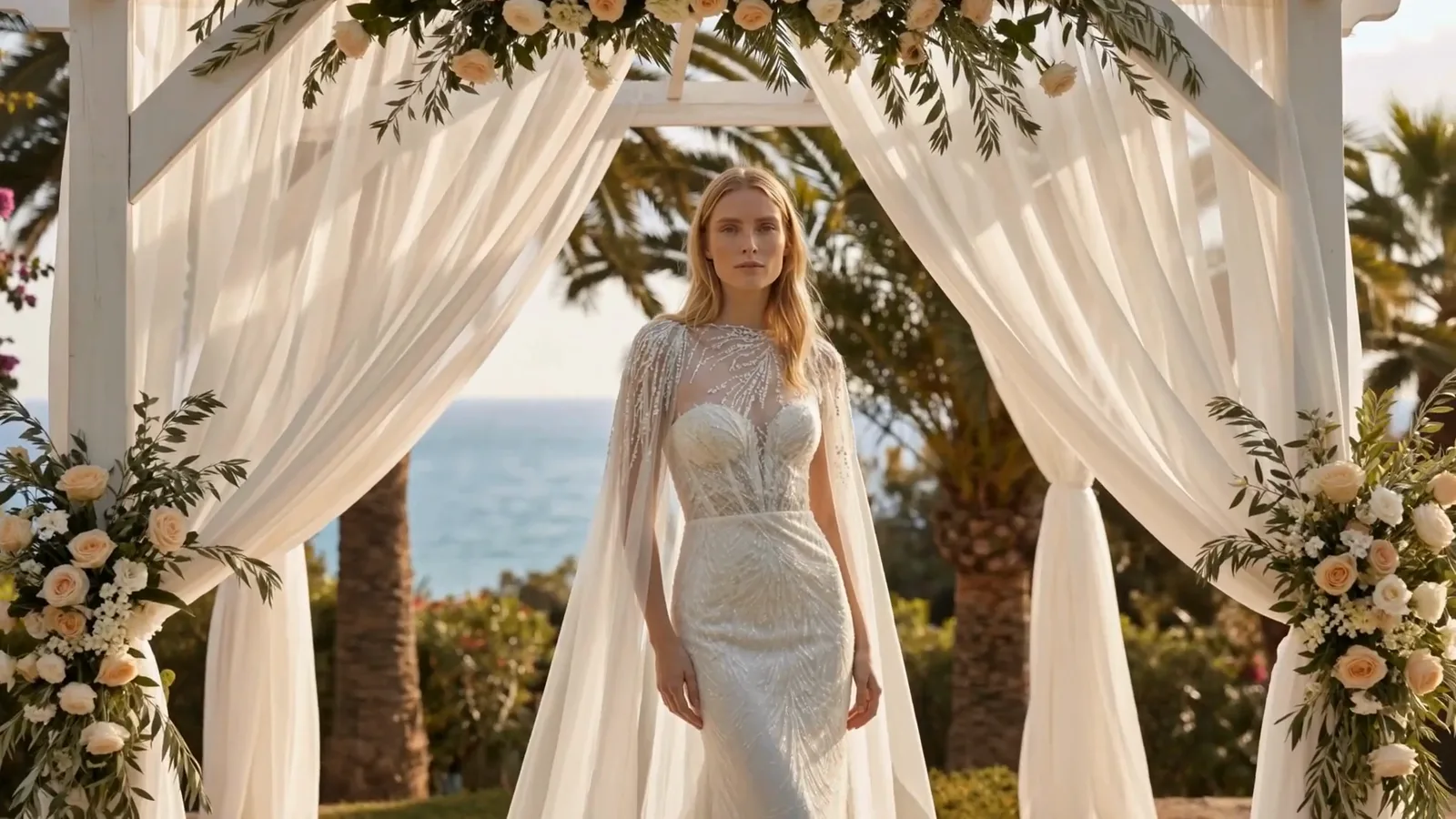
FAQ
Questions about AI fashion
catalogs and lookbooks
How faithful is the result to the real garment?
The goal is product fidelity: proportions, fit, color, fabric texture and yarns are checked against the starting photos of the real garment before production. Every image goes through a quality-control review that compares the result with the original garment before delivery.
Can textures, yarns and jacquards stay faithful to the original?
Yes. Knitwear, jacquards, technical fabrics and complex yarns are the area we work on most carefully, because it's where generic AI loses fidelity most easily. High-resolution detail photos of the fabric are needed as a reference: the more precise they are, the more the result respects the real weave and structure.
Can full look and close-up shots be created in the same set?
Yes. For each garment or outfit, several framings can be produced, full figure, ¾ and close-up detail, keeping the same setting, light and model, so the images stay consistent even when used on different channels.
Can the same model be used throughout the collection?
Yes. A set of AI models consistent with the brand's identity is defined at the start of the project and kept across the whole collection, so the catalog doesn't have faces or builds that change from garment to garment. The same set also remains available for subsequent seasonal catalogs.
Can you change just the location or styling without regenerating everything?
Yes. Changing the setting, background or styling of an already-approved image doesn't require a new production session: you work on the single variable while keeping garment, model and framing unchanged.
How do revisions work?
After an initial test on a limited number of garments, creative direction, models, light and product fidelity are validated together with the client. Only after approval does production of the whole collection start in batches, with a round of targeted revisions on the final assets before delivery.
How much starting material is needed?
You need high-resolution photos of each garment, preferably several angles, plus details of fabric, seams and fastenings, along with any style references, color palette or previous brand campaigns. There's no need to ship the garments physically.
How long does a complete seasonal catalog take?
It depends on the number of garments, the assets required per garment and the revision rounds. A medium-to-large seasonal catalog typically takes a few weeks from brief confirmation to the initial test, plus batch production time: exact timelines are set at the quoting stage based on the specific volume.
Can you work on several collections or brands at the same time?
Yes. It's common for companies with several lines or several brands in the same group: each collection keeps its own creative direction, its own models and its own visual identity, managed as separate projects but with the same point of contact and the same production workflow.
Can we start with a test before committing to the whole collection?
Yes, and it's the recommended way to start. A small set of test images is produced on a few representative garments from the collection, to validate product fidelity, models and creative direction before moving on to producing the entire catalog.
Your next catalog,
without losing the product along the way.
Tell us about your brand, collection and volumes: we'll reply with an initial assessment within 24 hours.