
AI Product Photography
AI product photos:
realistic images without a photo shoot
DigitalX Studio is a Creative AI Agency based in Bergamo that produces photorealistic product images using artificial intelligence. The service starts at 20€ per image, delivers in 5-10 days and requires no location, model or set days.
At a glance
- Delivery in 5-10 days, compared to 2-4 weeks for a traditional photo shoot
- Prices from 20€ per digital image, decreasing with volume
- 50-image e-commerce package: 1,490€ (equivalent photo shoot: 4,550€-7,400€)
- Reusable AI model for future campaigns (Soul / Element)
- Variants and A/B testing in 24-48 hours, without going back to the studio
What it is
What is AI product
photography?
AI product photography is a process in which product images are generated with artificial intelligence models starting from real photographs of the product itself. The result is photorealistic images where the product appears in scenes, contexts and settings that would be impossible or too expensive to create with a physical photo shoot.
DigitalX Studio doesn't use generic AI. It trains a model specific to the client's product (or to the face chosen for the campaign), ensuring the final images respect real textures, colors and proportions. Every output goes through precise art direction before delivery.
What we need
What materials you need
to get started
You don't need to ship the product: complete digital references are enough. The more precise they are, the fewer iterations it takes to reach a faithful image. If you're nearby, you can also bring samples to our studio in Bergamo.
01
Photos from several angles
Front, side, back and details of packaging or label, in good light and without strong reflections. In-house shots are fine as long as they're sharp.
02
Vector logo
A separate vector file (SVG, AI, EPS or PDF) means the logo isn't rebuilt from a photo, reducing the risk of distorted outlines.
03
Colour reference
Pantone or HEX code for product and packaging. A photo changes colour with the light; a numeric code doesn't.
04
Materials and finishes
Tell us whether surfaces are matte, glossy, metallic, transparent or fabric: it guides how light and reflections are rendered.
05
Use and formats
Where the images will run (shop, marketplaces, social, ads, print) and with which ratios and backgrounds. It sets resolution and delivery.
06
Style references
Brand guidelines, previous campaigns, images you like and what you want to avoid. They're the basis of the moodboard.
Already have real shots of the product? We can start from those: we place them in new settings, change the background or extend them to the formats you're missing.
Fidelity
True to the product,
the logo and the colours
An AI image can look great and still be unusable: a slightly skewed logo, a packaging colour that drifts, a bottle a little wider than the real one. For a brand those errors don't pass, so checking isn't done by eye on a preview.
Before delivery, every image is compared at full resolution with the real product and corrected by hand where needed, on four points:
Colour
Checked against the reference code, to avoid tone drifting from one image of the series to the next.
Logo and labels
Legibility, position and proportions of the brand mark and label text.
Shape and proportions
Relative size, caps, closures and construction details compared with the multi-angle photos.
Texture and edges
No artefacts on edges, seams, surfaces and reflections.
If the packaging changes during the project, the references need updating before new images are produced. Read more: how to keep product, logo and packaging faithful in AI images.
Models and settings
Packshots, settings
and AI models
The same product can be shown in three different ways, often within the same project:
Packshot on a neutral background
For shop and marketplace product pages, with consistent backgrounds and framing across the whole catalogue.
Product in a setting
Still life, lifestyle or scenes impossible to build on a set, for campaigns, social and advertising.
Worn or in use
Custom-made AI models with the same face and style across every image in the series. For whole collections, see our AI fashion catalogs.
Moodboard, models and locations are approved before the full series is produced, so creative choices happen at the start, not at the end. Faces are created from scratch: we avoid resemblance to real people and don't reproduce recognisable testimonials or public figures. Why it matters is explained in our guide on image rights and virtual models.
Variants
Colour, scene
and format variants
Once product and visual direction are set, variants don't need a new set: the same item in other colours, the same product in another setting or season, the same shot adapted to 1:1, 4:5, 9:16 or 16:9. A new variant of scene, colour or context is generated in 24-48 hours.
That's what makes catalogues with many SKUs and visual A/B tests on campaigns sustainable. Many brands also work in a hybrid way: a real shot sets the product standard and AI production generates the variations. Pros and cons in our guide AI product photography or a traditional shoot.
Process
Review and delivery:
how it works
01
Brief and references
You tell us what the images are for and send the materials. We reply with an estimate within one business day.
02
Visual direction
Moodboard, settings and any models to approve before production starts.
03
Production and checks
Generation, retouching and a fidelity check on every image against the real product.
04
Review
Collect your feedback in a single list: changes are applied across the whole series. The quote states how many rounds are included.
05
Delivery
Files in the formats and backgrounds required by shops, marketplaces, social and ads; high-resolution CMYK files for print. Timeline: 5-10 business days.
Work
Projects from our portfolio
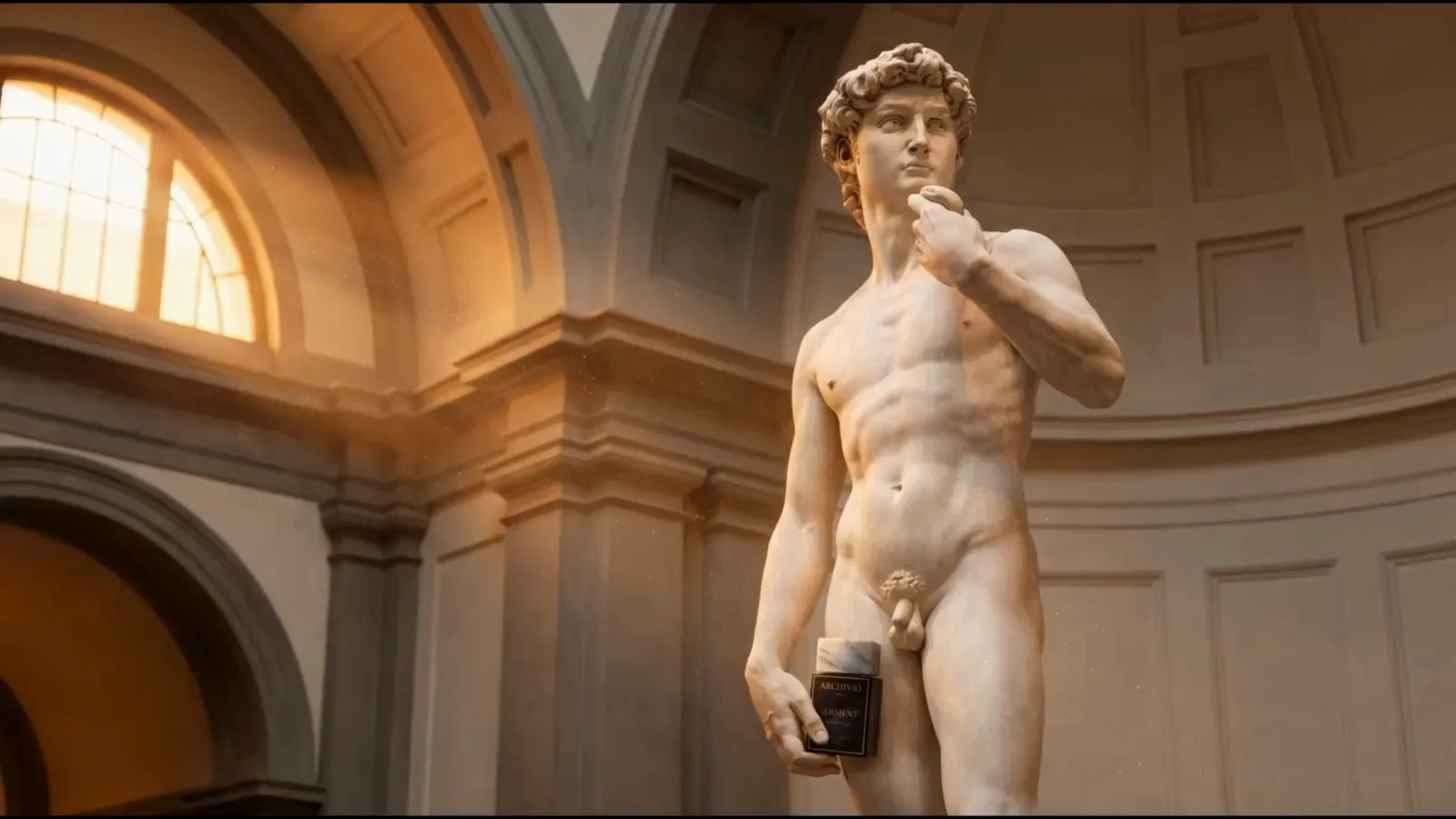
Some published projects where AI image production is part of the work. The rest is in the full portfolio.

Comparison
AI product photography
vs traditional photo shoot
A photographer shoots the product wherever you physically bring it. With AI, the product is placed in the chosen scene, on Mars, in a waterfall of petals, on a futuristic set, with no set design costs. At high volumes, the price per image drops progressively, while with a traditional photo shoot it grows linearly: more set days, more direction hours, more locations.
| Traditional photo shoot | AI Product Photography (DigitalX) | |
|---|---|---|
| Delivery time | 2-4 weeks (location, model, post-production) | 5-10 business days |
| Location and model cost | Included in the quote, often a fixed cost even for a few shots | Zero, not needed |
| Variants and A/B testing | Every new scene requires going back to the studio | New variant in 24-48 hours |
| Consistency over time | New photo shoot for every seasonal campaign | Same AI model reusable for years (Soul / Element) |
| Cost scalability | Grows linearly with the number of shots | Cost per image drops with volume |
| Impossible scenes | Requires costly set design or is simply not feasible | Available with no extra set cost |
Pricing
How much does AI product
photography cost?
Every price includes art direction, generation and revisions. The higher the volume, the less you pay per single image.
Digital
from 20€
per image
- Web / e-commerce / social format
- Art direction included
- Price drops with volume
- Delivery in 5-10 days
A3 print
130€-160€
per image
- High resolution for printing up to A3
- Suitable for catalogs, trade fairs, POS displays
- TIFF/PNG file delivered
- CMYK color profile included
Roll-up / banner
180€-230€
per piece
- Format optimized for roll-up
- Print-ready vector file
- Suitable for events and trade fairs
- Custom sizes on request
50 e-commerce images
1,490€
complete package, 29.80€/img
- 50 finished digital images
- AI model trained on your product
- Multiple scenes and variants included
- Equivalent photo shoot: 4,550€-7,400€
- Estimated savings: 67-80%
Volume discount, digital images
| Volume | Price per image | Savings vs single |
|---|---|---|
| 1-5 images | ~50€ | - |
| 10 images | ~40€ | -20% |
| 25 images | ~33€ | -34% |
| 50 images | ~30€ | -40% |
| 100+ images | from 20€ | -60% and above |
Volume prices are indicative and are defined in the quote based on product type, number of scenes and formats required. The base price from 20€/img applies to high-volume orders with an already trained AI model.
Real limitations
When AI photography
isn't the right choice
AI product photography covers the vast majority of consumer products: fashion, beauty, food, accessories, homeware, furniture. There are cases where a traditional photo shoot is still superior.
Where a physical photographer still wins
On products with microscopic engravings or highly precise technical reflections, such as high-end mechanical watchmaking, traditional macro photography captures details that AI struggles to reproduce with the same fidelity. Similarly, if you need a recognizable real face (a famous testimonial or a specific public figure), this isn't a service we offer. For the rest of your product catalog, AI photography is the faster, more affordable choice.
Frequently asked questions
Questions about AI
product photography
Do AI product images look real?
Yes. DigitalX Studio works for product fidelity and realistic skin/material textures. The result isn't the plastic effect typical of generic AI, but images with the visual quality of a professional photo studio. Every output goes through precise art direction and human review before delivery.
Do I need to send the physical product?
No. Digital references are enough: high-resolution photos of the product from several angles, the logo as a vector file, a Pantone or HEX colour code and notes on materials and finishes. You'll find the full list in the materials section. The more detailed the starting photos, the better the final result.
Can I use the same AI model in future campaigns?
Yes. We train a specific model (Soul or Element) on your product or the face chosen for the campaign. This model remains reusable for future productions, at a lower cost than the first session because the base work is already built.
Can I request different variants after delivery?
Yes. It's one of the main advantages over a traditional photo shoot. A new variant of scene, color or setting is generated in 24-48 hours, with no need to book a studio, model or location. This makes visual A/B testing far more accessible in terms of cost and time.
Can the images be used for Meta and Google advertising campaigns?
Yes. Images are produced in formats optimized for the main advertising platforms (Meta Ads, Google Ads, e-commerce, print). Specify the formats and sizes you need in the brief and we'll include them in production.
How do you make sure colours and logo match the real product?
We start from a numeric colour reference (Pantone or HEX) and the vector logo, not just a photo. Before delivery, every image is compared at full resolution with the real product for colour, logo, proportions and artefacts, and corrected by hand where needed.
How do revisions work?
After the first delivery you collect your feedback in a single list and the changes are applied across the whole series. The number of included rounds is stated in the quote, so you know in advance what the price covers.
Guides
Further reading on
AI product photography
- How much does AI product photography cost? Prices, timelines and formats
- AI product photography or a traditional shoot? A guide to choosing
- How to keep product, logo and packaging faithful in AI images
- Midjourney vs Flux vs Ideogram: best AI for product photography
- AI and image rights: what brands must know before using virtual models
Your product images,
ready in days.
Send us your product photos, we'll reply with an estimate in 24 hours.